1. Introduction to Remote Hiring USA
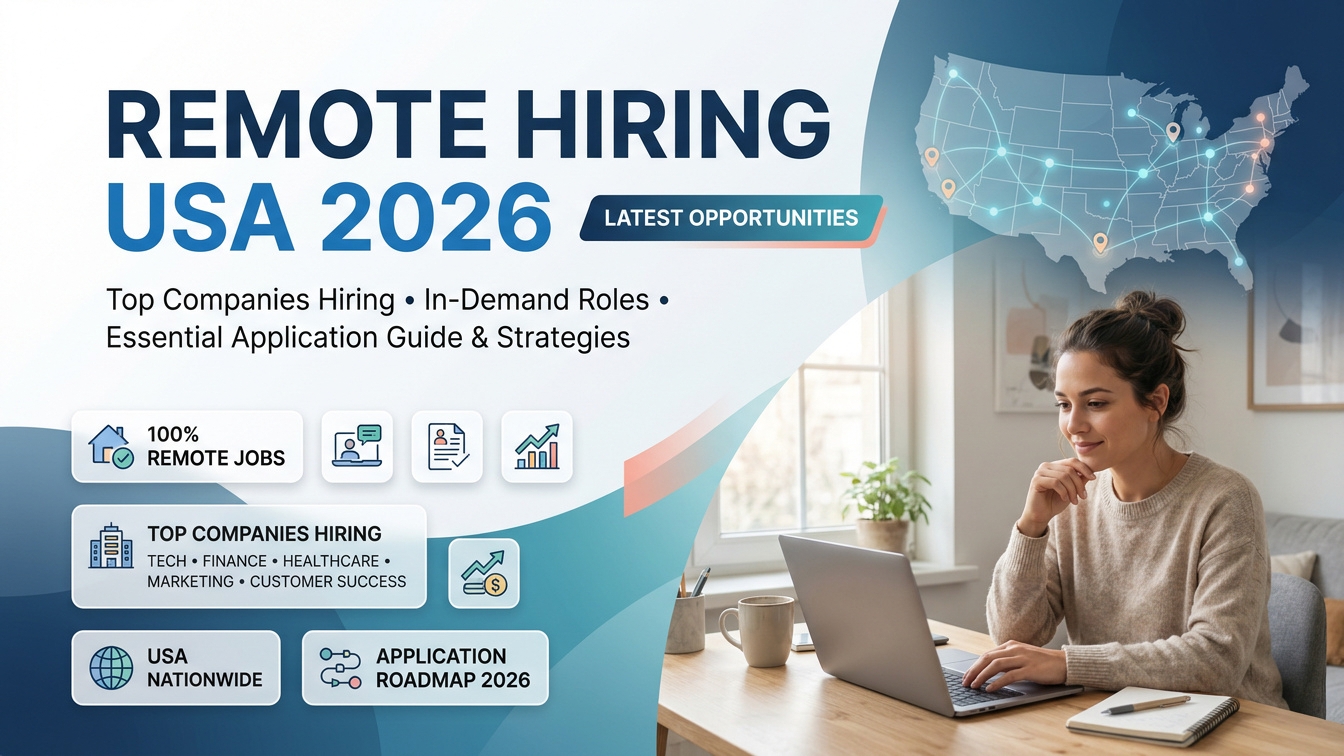
Remote Hiring USA has become an important topic for job seekers looking for flexible employment and professional opportunities in the United States. With improvements in internet technology, digital communication, and online business operations, many companies now recruit employees who can perform their responsibilities outside traditional office environments.
Remote employment allows qualified candidates to work from home or another approved location while communicating with employers through digital platforms. Businesses across industries such as technology, customer service, healthcare administration, education, finance, marketing, and business management offer different types of remote working arrangements.
In 2026, remote hiring continues to attract experienced professionals, fresh graduates, freelancers, and individuals searching for flexible employment. Some companies advertise full-time positions, while others recruit part-time workers, independent contractors, and temporary employees.
Whether you are looking for your first remote position or planning to change your professional career, understanding the hiring process can help you find suitable opportunities.
This guide explains remote hiring trends, popular job categories, salary expectations, application requirements, trusted job websites, and practical tips for getting hired by US companies.
2. What Is Remote Hiring in the USA?
Remote hiring is a recruitment process in which companies employ candidates to perform their assigned responsibilities from locations outside a traditional office.
Instead of requiring employees to attend an office every day, employers use online recruitment platforms, video interviews, digital assessments, and communication software to identify and recruit suitable candidates.
Remote hiring can include several employment arrangements:
- Fully Remote Hiring: Employees perform their responsibilities remotely without regular office attendance.
- Hybrid Hiring: Companies recruit employees who divide their working hours between home and office locations.
- Part-Time Remote Hiring: Employers recruit workers for fewer weekly hours.
- Full-Time Remote Hiring: Candidates receive regular full-time employment opportunities.
- Contract Hiring: Companies recruit professionals for specific projects or fixed periods.
- Freelance Hiring: Businesses hire independent professionals to complete individual assignments.
Understanding these employment types helps applicants choose opportunities according to their qualifications, schedules, and career goals.
3. Best Remote Jobs Available in the USA
American companies recruit remote workers for different professional responsibilities. Some positions require specialized qualifications, while others are suitable for applicants with basic computer knowledge and communication skills.
Here are some popular remote employment categories.
1. Remote Customer Service Representative
Customer service representatives help customers through phone calls, emails, and live chat systems.
Their responsibilities include answering questions, resolving complaints, processing requests, and providing information about products or services.
Common Requirements:
- Strong communication skills.
- Basic computer knowledge.
- Problem-solving abilities.
- Professional customer interaction.
- Reliable internet access.
2. Remote Data Entry Jobs
Data entry employees organize, update, and maintain digital information for businesses.
Their tasks may include entering customer information, updating spreadsheets, reviewing documents, and maintaining online databases.
This position can be suitable for beginners with accurate typing skills and attention to detail.
Applicants should carefully verify job advertisements because fraudulent data entry offers sometimes promise unrealistic earnings.
3. Remote Software Developer Jobs
Software developers create websites, applications, business software, and digital systems.
Technology companies recruit professionals with experience in programming languages such as Python, JavaScript, Java, and C++.
Some employers offer junior developer positions, while senior roles generally require professional experience and technical expertise.
4. Remote Digital Marketing Jobs
Digital marketing specialists help businesses promote products and services through online channels.
Their responsibilities may include:
- Search engine optimization.
- Social media management.
- Email marketing.
- Online advertising.
- Content planning.
- Website performance analysis.
Candidates with marketing knowledge, creativity, and analytical abilities can explore opportunities in this field.
5. Remote Virtual Assistant Jobs
Virtual assistants provide administrative support to business owners, entrepreneurs, and organizations.
Common responsibilities include managing emails, scheduling appointments, organizing files, preparing reports, and conducting online research.
These positions may be available through freelance platforms and companies recruiting remote administrative employees.
6. Remote Content Writing Jobs
Content writers create articles, website pages, product descriptions, and informational materials for businesses.
Employers may recruit writers with knowledge of grammar, research, search engine optimization, and digital publishing.
Both freelance and full-time opportunities are available in this category.
7. Remote Online Teaching Jobs
Online teaching allows qualified instructors to provide lessons through video conferencing and digital learning platforms.
Popular subjects include English, mathematics, science, computer programming, and business education.
Some positions require teaching experience or academic qualifications, depending on the employer.
8. Remote Graphic Designer Jobs
Graphic designers prepare visual materials for websites, social media accounts, advertising campaigns, and businesses.
They may create logos, promotional banners, presentations, and digital advertisements.
Knowledge of design software and a professional portfolio can improve employment opportunities.
4. Remote Hiring USA Salary Comparison
Salary is an important consideration when applying for remote positions. Compensation depends on experience, qualifications, job responsibilities, employer, and location.
The following table provides illustrative annual salary ranges for selected remote occupations in the United States.
| Remote Job Position | Estimated Annual Salary |
|---|---|
| Customer Service Representative | $32,000–$48,000 |
| Data Entry Clerk | $30,000–$42,000 |
| Virtual Assistant | $35,000–$55,000 |
| Content Writer | $40,000–$70,000 |
| Graphic Designer | $45,000–$75,000 |
| Digital Marketing Specialist | $50,000–$80,000 |
| Technical Support Specialist | $40,000–$65,000 |
| Online Tutor | $35,000–$65,000 |
| Software Developer | $80,000–$130,000 |
| Project Manager | $75,000–$115,000 |
Note: These are broad illustrative estimates, not guaranteed salaries or verified current vacancies. Actual compensation varies according to employer, experience, location, and employment arrangements.
5. Companies and Websites to Explore for Remote Hiring
Finding legitimate remote vacancies becomes easier when applicants use established recruitment platforms and official company career pages.
6. Entry-Level Remote Hiring USA Opportunities
Not every remote position requires years of professional experience. Some employers recruit beginners who demonstrate reliability, communication skills, and basic computer knowledge.
Popular entry-level opportunities include:
Customer Support Assistant: Help customers with general questions and basic service requests.
Data Entry Assistant: Enter and organize information in digital databases.
Online Research Assistant: Collect information and prepare research summaries.
Virtual Administrative Assistant: Manage emails, documents, and appointment schedules.
Social Media Assistant: Schedule content and help businesses manage their online accounts.
Content Writing Assistant: Prepare basic articles, website content, and product descriptions.
Beginners should prepare a professional resume and highlight relevant skills, education, training, and practical projects.
7. Requirements for Remote Hiring in the USA
Remote employers generally look for candidates who can work independently, communicate professionally, and complete assigned tasks on time.
Educational Qualifications
Some professional positions require a bachelor’s degree or specialized training. However, many administrative and entry-level jobs focus on practical skills and relevant experience.
Technical Skills
Candidates should understand basic computer operations, email communication, digital documents, and online collaboration platforms.
Knowledge of Microsoft Office, Google Workspace, and video conferencing software can be useful.
Communication Skills
Remote employees regularly communicate with managers, colleagues, and customers through digital channels.
Clear written and verbal communication helps maintain productivity and professional relationships.
Reliable Equipment
Most remote positions require a computer, stable internet connection, and a suitable working environment.
Certain jobs may also require a webcam, headset, or specialized software.
Time Management
Remote employees must organize their daily responsibilities, follow schedules, and meet deadlines without constant supervision.
8. How to Apply for Remote Jobs in the USA
Finding remote employment requires preparation and a consistent application strategy.
Follow these steps to improve your chances of getting hired.
Step 1: Select Your Career Field
Choose a job category that matches your qualifications, experience, and professional interests.
Step 2: Prepare a Professional Resume
Create a clear resume that highlights your education, work history, technical abilities, and achievements.
Include skills related to communication, organization, problem-solving, and remote collaboration.
Step 3: Create a LinkedIn Profile
Build a professional profile containing your career summary, education, experience, and relevant skills.
Step 4: Search for Remote Vacancies
Use established employment platforms and search phrases such as:
- Remote Hiring USA.
- Remote Jobs Hiring Now.
- Work From Home Jobs USA.
- Entry-Level Remote Positions.
- Full-Time Remote Careers.
- Part-Time Remote Jobs.
Step 5: Review Job Descriptions
Check experience requirements, salary information, location restrictions, working hours, and employment conditions.
Step 6: Submit Your Application
Prepare a customized resume and cover letter explaining why you are suitable for the position.
Step 7: Prepare for Online Interviews
Practice answering questions about your professional experience, technical abilities, communication skills, and remote working habits.
9. Remote Hiring USA for International Applicants
International job seekers also search for remote opportunities offered by American businesses. However, applicants should understand that not every US company hires workers from outside the United States.
Some employers require candidates to live in specific states because of payroll, taxation, employment regulations, and business requirements.
Other companies recruit international freelancers and independent contractors.
International applicants should look for job advertisements mentioning:
- Worldwide remote employment.
- International applicants welcome.
- Global contractor positions.
- Work from anywhere.
- International freelance projects.
Candidates living outside the United States should also understand their local tax responsibilities and relevant employment regulations.
10. Benefits of Remote Employment
Remote employment offers several advantages for both workers and businesses.
Flexible Working Environment: Employees can complete their responsibilities from approved locations without daily office attendance.
Reduced Travel Expenses: Working remotely can reduce commuting costs and save valuable time.
Better Work-Life Balance: Some positions offer flexible arrangements that help employees manage personal and professional responsibilities.
More Career Opportunities: Remote hiring connects candidates with employers located in different cities and regions.
Professional Development: Remote employees can develop technical, communication, and organizational skills.
However, remote work also has challenges, including distractions, limited face-to-face interaction, and the need for self-discipline.
11. How to Avoid Remote Hiring Scams
Online employment scams can affect beginners and experienced professionals. Fraudulent recruiters sometimes advertise unrealistic salaries or request money before providing employment.
Follow these safety practices:
- Verify employers through their official websites.
- Research companies before sharing personal information.
- Avoid paying upfront recruitment or registration fees.
- Never share banking passwords or verification codes.
- Be cautious of unrealistic salary promises.
- Confirm recruiter email addresses.
- Read employment agreements carefully.
- Avoid suspicious requests to transfer money.
- Verify interview invitations through official company channels.
- Never provide sensitive financial information during an unverified recruitment process.
A legitimate hiring process should provide clear job responsibilities, understandable compensation terms, and professional communication.
12. Tips to Increase Your Chances of Getting Hired
Competition for remote positions can be high. Applicants can improve their chances by developing relevant skills and following a consistent job search strategy.
Here are some practical tips:
- Apply to positions that match your qualifications.
- Customize your resume for each vacancy.
- Improve computer and communication skills.
- Develop knowledge of remote collaboration tools.
- Create a professional portfolio when relevant.
- Keep your LinkedIn profile updated.
- Practice common online interview questions.
- Research employers before accepting offers.
- Follow up professionally with recruiters.
- Continue learning skills related to your career.
A professional approach and consistent applications can help candidates discover suitable employment opportunities.
13. Future of Remote Hiring in the USA
Remote recruitment is closely connected to changing business requirements and technological development.
Companies increasingly use cloud-based applications, video conferencing, digital recruitment systems, and artificial intelligence tools to manage their operations.
Technology, customer support, digital marketing, online education, and business administration are among the fields where remote opportunities can be found.
Artificial intelligence is also changing workplace responsibilities. Candidates who develop technical knowledge, creativity, analytical thinking, and problem-solving skills may be better prepared for future employment requirements.
Although some businesses prefer traditional office arrangements or hybrid schedules, remote employment remains an important option in the modern workforce.
14. Frequently Asked Questions (FAQs)
1. What does Remote Hiring USA mean?
Remote Hiring USA refers to the recruitment of employees and contractors by US companies for positions that can be performed remotely rather than in a traditional office.
2. Which companies offer remote job opportunities in the USA?
Job seekers can explore remote vacancies through company career pages and platforms such as Amazon Careers, Indeed, LinkedIn, FlexJobs, and Remote.co. Actual availability depends on current vacancies and location requirements.
3. Can beginners apply for remote jobs in the USA?
Yes. Beginners can explore customer support, data entry, virtual assistance, online research, and administrative positions.
4. What qualifications are required for remote employment?
Requirements depend on the position. Some employers require degrees and professional experience, while others focus on computer knowledge, communication, and practical skills.
5. How much do remote employees earn in the USA?
Earnings depend on job category, experience, employer, and location. Specialized technology and management positions generally have different salary levels from entry-level administrative roles.
6. Can international applicants apply for remote US jobs?
Yes, if the employer accepts international applicants. Some companies hire worldwide contractors, while others only recruit candidates authorized to work in the United States.
7. Where can I find remote hiring opportunities?
You can explore Indeed, LinkedIn, FlexJobs, Remote.co, and We Work Remotely for remote employment listings.
8. Are remote jobs available without experience?
Yes. Some entry-level opportunities do not require extensive professional experience, although employers may expect basic computer and communication skills.
9. How can I identify legitimate remote employers?
Research the company, check its official website, verify recruiter information, avoid upfront fees, and carefully review employment agreements.
10. Are full-time and part-time remote jobs available?
Yes. Companies offer different employment arrangements, including full-time, part-time, contract-based, freelance, and hybrid positions.
Conclusion
Remote Hiring USA provides valuable opportunities for job seekers interested in flexible employment and professional growth in 2026. American businesses recruit remote professionals across several industries, including technology, customer service, marketing, administration, education, and creative services.
Finding the right position requires a professional resume, relevant skills, effective communication, and consistent applications. Candidates should also use trusted recruitment platforms and verify employers before accepting job offers.